

Garden maintenance doesn’t require a shed full of expensive equipment that you’ll use twice a year and forget about the other 363 days. This guide breaks down the five essential tools that actually handle most seasonal lawn tasks, plus smart alternatives like hiring a Tasker when buying specialised equipment might not make sense for you.
Essential lawn tools for garden maintenance
The essential tools for lawn care are: lawn mower, string trimmer, garden rake, fertiliser spreader, and basic hand tools. These five tools handle most seasonal tasks without cluttering your shed year-round. They address winter damage like overgrown grass, debris buildup, and bare patches.
Lawn mower for clean, even cuts
A lawn mower is your primary weapon against winter’s aftermath. After months of neglect, your grass needs a clean, precise cut to encourage thick, healthy growth rather than ragged tears that invite disease and pests.
Choose your mower based on garden size and terrain:
- Push mowers: Small, flat gardens under half an acre
- Self-propelled: Slopes and larger areas
- Electric: Quieter operation, less maintenance
- Petrol: More power for thick grass or gardens over an acre
String trimmer for precise edges
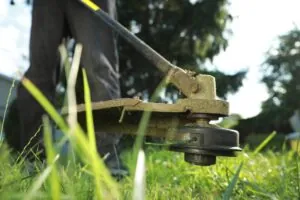
A string trimmer handles detail work your mower can’t reach, creating crisp lines that separate amateur gardens from magazine-worthy landscapes.
String trimmers excel at trimming grass along fence lines, around tree bases, gate posts, and house foundations. Most models turn vertically for edging along pathways and driveways.
Trimmer tasks include cutting back dead ornamental grass, trimming around newly planted trees, and edging garden beds for clean separation between lawn and planted areas.
Key trimmer features to consider:
- Power source: Petrol offers unlimited runtime but requires more maintenance; electric provides consistent power with less upkeep
- Shaft length: Longer shafts reduce bending but can be harder to control in tight spaces
- Line feed system: Automatic feed systems save time compared to manual bump-feed models
Leaf blower for quick debris removal
A leaf blower turns hours of raking into minutes of easy cleanup. After winter, your lawn is hiding matted leaves, twigs, and debris that need removal before other maintenance begins. Types of leaf blowers include:
- Corded electric: Small gardens close to sockets
- Battery-powered: Freedom of movement, quieter operation
- Petrol-powered: Most power for large gardens and stubborn debris
Leaf blower uses include clearing driveways after storms, moving loose debris off garden beds, and pushing grass clippings back onto the lawn after mowing. For best results, work with the wind rather than against it, and move debris to a central pile.
Garden rake for debris and thatch removal
Garden rakes feature rigid steel tines for heavy debris removal and soil preparation. They move matted leaves, fallen branches, and winter debris whilst preparing garden beds for new plantings.
The most critical maintenance task is removing thatch, a dense layer of dead grass that blocks water, air, and nutrients from reaching grass roots. Pull a stiff garden rake firmly across your lawn to lift this dead material and reveal bare patches that need reseeding.
Signs your lawn needs dethatching:
- Spongy feel: Lawn feels bouncy or spongy when you walk on it
- Water runoff: Water sits on the surface instead of soaking in
- Thin grass: Grass appears thin despite adequate watering and fertilising
- Visible layer: You can see a brown, matted layer when you part the grass
Fertiliser spreader for even coverage
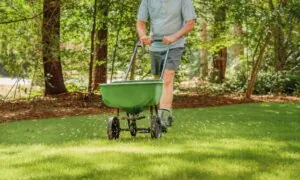
Fertiliser jumpstarts your lawn’s recovery from winter dormancy in the spring, but uneven hand-spreading creates patchy coverage that scorches some areas whilst leaving others weak and thin.
A fertiliser spreader ensures uniform distribution. Broadcast spreaders work best for medium to large gardens, whilst drop spreaders suit smaller gardens with controlled paths.
Calibrate your spreader before you start using the settings on your fertiliser packaging. Too much scorches grass; too little provides inadequate nutrition.
| Spreader Type | Best For | Coverage Pattern | Pros | Cons |
| Broadcast | Large gardens | Wide, overlapping arcs | Fast coverage, works on slopes | Less precise, can miss edges |
| Drop | Small gardens, precise work | Narrow, controlled strips | Very precise, no waste | Slower coverage, shows overlap marks |
Apply fertiliser once your grass begins actively growing and “greening up”. This typically happens after you’ve mowed once or twice, indicating the grass has emerged from winter dormancy.
Hose and watering essentials
A good hose handles everything from watering grass to cleaning tools. The right setup saves time and eliminates hauling watering cans across the garden.
Key hose considerations:
- Length: Reach the farthest corner with extra footage
- Material: Rubber lasts longer and kinks less than vinyl
- Storage: Expandable hoses work well in tight spaces
- Nozzle: Adjustable types switch from mist to steady shower
For hands-off watering, a basic sprinkler or soaker hose covers larger areas whilst you get on with other tasks. Water deeply and less often to encourage strong root growth, and aim for early morning sessions so grass dries before evening.
Hand tools for spot repairs
Hand tools tackle precision work that power equipment can’t handle, addressing specific problems before they spread.
Essential hand tools for lawn care include:
- Hand trowel: Digs holes for annual flowers, removes weeds with their roots intact, and creates planting pockets for grass seed in bare spots
- Specialised weeders: Eliminate early-season weeds when they’re easiest to pull
- Pruning shears: Address winter damage on shrubs and small trees; sharp bypass pruners make clean cuts that heal quickly, removing branches damaged by frost, ice, or wind
Lawn tool add-ons for bigger jobs
Specialised equipment addresses specific lawn problems or handles larger gardens more efficiently. These tools often make sense as rentals rather than purchases for most homeowners, especially if you only need them once or twice per year.
Lawn aerator for compacted soil
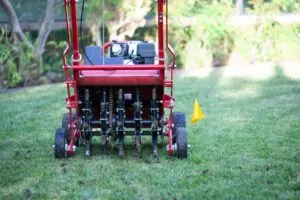
Compacted soil blocks air, water, and nutrients from reaching grass roots, particularly in high-traffic areas, clay soils, or lawns damaged by heavy equipment. Core aerators remove small soil plugs to create channels that relieve pressure, and these plugs decompose naturally on the surface, adding organic matter back to your lawn.
Manual aerators work for small areas, walk-behind models handle medium lawns efficiently, and tow-behind versions attach to ride-on mowers for large gardens. Aerate during active growth periods when soil is moist but not waterlogged, ideally before overseeding so the holes provide excellent seed-to-soil contact for germination.
Power equipment worth considering
Additional power equipment can transform overwhelming tasks into manageable weekend projects. Consider your garden size, physical capabilities, and storage space when evaluating these tools.
- Leaf blowers: Move lightweight debris quickly across large areas, completing clear-ups in minutes rather than hours of raking
- Power dethatchers: Handle severe thatch problems when your layer exceeds half an inch thick
- Hedge trimmers: Essential for gardens with extensive shrub borders or formal hedges
- Pressure washers: Remove winter grime from pathways, decking, exterior walls, and garden furniture
Considerations for renting vs. buying equipment
Before you commit to purchasing expensive lawn care equipment, weigh the true cost of ownership against rental options. The right choice depends on your specific circumstances and how often you’ll actually use the tools.
Key factors to evaluate:
- Storage space: Large equipment requires significant storage space when not in use
- Usage frequency: Tools used once or twice yearly often make better rental candidates
- Maintenance requirements: Petrol-powered equipment needs regular maintenance and winterisation
- Initial cost: Quality equipment can cost more than several years of rental fees
When to hire a Tasker for garden maintenance
Sometimes the smartest tool for garden maintenance isn’t a tool at all. Hiring a Tasker makes sense when you’re dealing with large gardens, one-off projects like major clear-outs, or limited storage space for bulky equipment.
Many Taskers arrive with the right equipment for any garden task, which also means you don’t need to worry about renting or buying.
Whether you invest in a core set of essential tools, hire specialised equipment for one-off projects, or hand the to-do list over to a skilled Tasker, you have options.
The goal is a great-looking lawn without the headache. If you’ve decided your time is the most valuable tool you have, book trusted help for garden maintenance and get your weekend back.